UPSC IR Quiz – UN (Part 2)
Welcome to this comprehensive UN MCQ quiz designed specifically for UPSC aspirants focusing on International Relations. The United Nations plays a pivotal role in maintaining global peace, security, and cooperation among nations. This quiz covers various UN organizations, their functions, and key facts that every candidate should know. Attempt all questions before revealing answers to test your knowledge effectively. Practicing such UN MCQ questions will enhance your understanding and prepare you well for the UPSC examination. Whether you are revising or learning new concepts, this quiz offers a balanced mix of medium difficulty questions to challenge your grasp on UN organizations and their significance in global governance.
Quick Facts
- The United Nations was established in 1945 after World War II to promote international peace and security.
- The UN has six principal organs, including the General Assembly and the Security Council.
- The International Court of Justice is the principal judicial organ of the UN.
- The UN Secretariat is headed by the Secretary-General, who is appointed for a five-year term.
- The UN Economic and Social Council (ECOSOC) coordinates economic and social work of the UN and its specialized agencies.
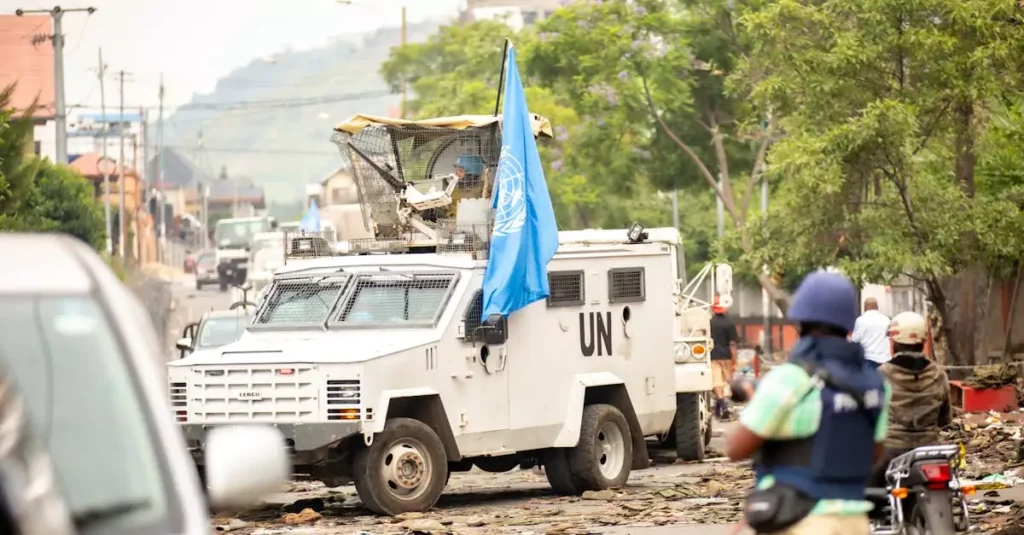
- The UN Peacekeeping forces are deployed to conflict zones to maintain peace and security.
- The World Health Organization (WHO) is a specialized agency of the UN focusing on international public health.
- The UN Human Rights Council promotes and protects human rights globally.
Q1. Which UN organ is primarily responsible for maintaining international peace and security?
- A) General Assembly
- B) Security Council
- C) International Court of Justice
- D) Economic and Social Council
Show Answer
Answer: B) Security Council
Explanation: The Security Council is the UN organ tasked with maintaining international peace and security. It has the authority to impose sanctions and authorize the use of force to resolve conflicts.
Q2. Which of the following is NOT a permanent member of the UN Security Council?
- A) France
- B) Germany
- C) China
- D) Russia
Show Answer
Answer: B) Germany
Explanation: Germany is not a permanent member of the Security Council. The five permanent members are the US, UK, France, Russia, and China.
Q3. The International Court of Justice is located in which city?
- A) New York
- B) Geneva
- C) The Hague
- D) Vienna
Show Answer
Answer: C) The Hague
Explanation: The International Court of Justice is headquartered in The Hague, Netherlands, and serves as the primary judicial organ of the UN.
Q4. Which UN specialized agency is responsible for global public health?
- A) UNESCO
- B) WHO
- C) IMF
- D) ILO
Show Answer
Answer: B) WHO
Explanation: The World Health Organization (WHO) is the UN specialized agency responsible for coordinating international public health efforts and combating diseases worldwide.
Q5. The UN Economic and Social Council (ECOSOC) primarily deals with which of the following?
- A) International peacekeeping
- B) Economic and social issues
- C) Judicial matters
- D) Environmental protection only
Show Answer
Answer: B) Economic and social issues
Explanation: ECOSOC coordinates the economic, social, and related work of the UN and its specialized agencies, focusing on sustainable development and human welfare.
Q6. Who appoints the Secretary-General of the United Nations?
- A) General Assembly alone
- B) Security Council alone
- C) Security Council and General Assembly
- D) Economic and Social Council
Show Answer
Answer: C) Security Council and General Assembly
Explanation: The Secretary-General is appointed by the General Assembly upon the recommendation of the Security Council, ensuring consensus among major powers.
Q7. Which UN body is responsible for promoting and protecting human rights worldwide?
- A) Human Rights Council
- B) International Court of Justice
- C) Security Council
- D) UNESCO
Show Answer
Answer: A) Human Rights Council
Explanation: The UN Human Rights Council is tasked with strengthening the promotion and protection of human rights globally through dialogue and action.
Q8. The UN Peacekeeping forces are deployed under the authority of which UN organ?
- A) General Assembly
- B) Security Council
- C) International Court of Justice
- D) Secretariat
Show Answer
Answer: B) Security Council
Explanation: The Security Council authorizes the deployment of UN Peacekeeping forces to conflict areas to maintain or restore peace and security.
Q9. UNESCO is a specialized agency of the UN that focuses on which area?
- A) Health
- B) Education, Science, and Culture
- C) Labor rights
- D) Economic development
Show Answer
Answer: B) Education, Science, and Culture
Explanation: UNESCO promotes international collaboration through education, science, culture, and communication to foster peace and security.
Q10. Which UN organ serves as its main deliberative, policymaking, and representative body?
- A) Security Council
- B) General Assembly
- C) Secretariat
- D) International Court of Justice
Show Answer
Answer: B) General Assembly
Explanation: The General Assembly is the main deliberative body where all member states have equal representation and discuss global issues and policies.
Key Comparison
| Concept | Details |
|---|---|
| Security Council vs General Assembly | The Security Council focuses on peace and security with five permanent members, while the General Assembly is a deliberative body with all member states having equal voting rights. |
| International Court of Justice vs Human Rights Council | The ICJ settles legal disputes between states, whereas the Human Rights Council promotes and protects human rights globally. |
| WHO vs UNESCO | WHO addresses global health issues, while UNESCO focuses on education, science, culture, and communication. |
| ECOSOC vs Secretariat | ECOSOC coordinates economic and social work of the UN; the Secretariat administers day-to-day operations under the Secretary-General. |
Important Points
- The UN Security Council has five permanent members with veto power.
- The General Assembly provides a platform for all member states to discuss international issues.
- The Secretary-General is appointed jointly by the Security Council and General Assembly.
- UN specialized agencies like WHO and UNESCO have distinct mandates supporting global welfare.
- Peacekeeping operations are authorized exclusively by the Security Council.
- The International Court of Justice settles disputes based on international law.
FAQs
What is the main function of the UN Security Council?
The Security Council is responsible for maintaining international peace and security. It can authorize sanctions, peacekeeping missions, and military action to address conflicts threatening global stability.
How are the permanent members of the Security Council chosen?
The five permanent members (US, UK, France, Russia, China) were chosen based on their roles as major Allied powers after World War II. They hold veto power on substantive resolutions.
What role does the UN General Assembly play?
The General Assembly serves as a forum for all 193 member states to discuss and coordinate on international issues, approve budgets, and make recommendations, though its resolutions are non-binding.
Can the Secretary-General be reappointed?
Yes, the Secretary-General serves a five-year term and can be reappointed for additional terms, subject to the approval of the Security Council and General Assembly.
What distinguishes UN specialized agencies from other UN bodies?
Specialized agencies like WHO and UNESCO operate independently but coordinate with the UN through ECOSOC, focusing on specific sectors such as health, education, or labor.
How does the International Court of Justice differ from national courts?
The ICJ settles disputes between states under international law, not individuals, and its rulings are binding only on the parties involved in the case.
Are all UN member states required to contribute troops to peacekeeping missions?
No, troop contributions to UN peacekeeping missions are voluntary. Member states decide whether to provide personnel and resources based on their capabilities and interests.
What is the role of ECOSOC within the UN system?
ECOSOC coordinates the economic, social, and related work of the UN and its specialized agencies, promoting sustainable development and improving living standards worldwide.
In conclusion, this UN MCQ quiz has covered essential aspects of various UN organizations, highlighting their roles and functions within the international system. Understanding these bodies is crucial for UPSC aspirants preparing for the International Relations section. Regular practice of such MCQ quizzes will strengthen your conceptual clarity and exam readiness. Keep revising and attempting more practice questions to master the topic effectively.